
Welcome to the website of the
Société Française de la Neutronique

Welcome to the website of the
Société Française de la Neutronique

The SFN is a learned society created in 1994 to promote neutronics within the scientific community and to federate the French neutronics community, covering a wide range of scientific fields (physics, chemistry, biology, etc.).

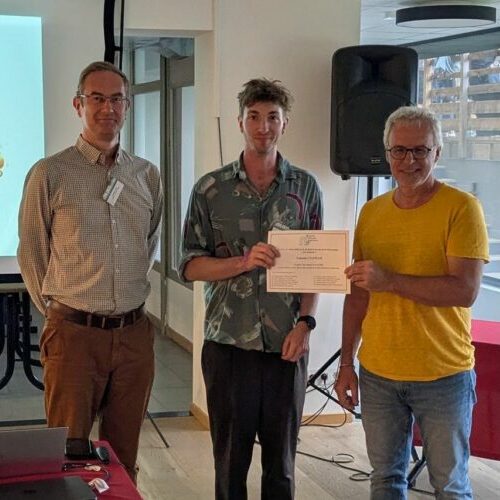
Every year, it organises the Journées de la Diffusion Neutronique, during which it awards its thesis prize to a young scientist.

Thematic Schools are held regularly, with courses published and freely accessible.

Finally, this website is at your disposal: it provides a forum for exchanging information about neutronics. Don’t hesitate to contact us and provide new ideas of contents!

📅 Registration for the 2026 Time-of-Flight Neutron Spectroscopy School is now open!

 From December 7 to 11, 2026, the school will take place at the ILL in Grenoble.

👉 More information at:  https://workshops.ill.fr/e/SFN2ESSand at SFN2ESS@ill.fr

SFN documents

  • Please find here the report of the round table on the future of French neutron scattering held during JDN2024.
  • A round table on HiCANS and the ICONE project was held during the JDN2023. Please find here a summary of the discussion.
  • The SFN calls for an ambitious French policy for neutron scattering. A letter has been sent in 2023 to the Ministry of Higher Education and Research, the CNRS and the CEA.

Bulletin SFN-2FDN

The latest SFN-2FDN bulletin is now available!

This newsletter is dedicated to the community of neutron scattering users. It is co-edited by 2FDN and SFN.

SFN Thesis Prize

Winner 2025

F. Ott, V. Czamler, O. Diat

News

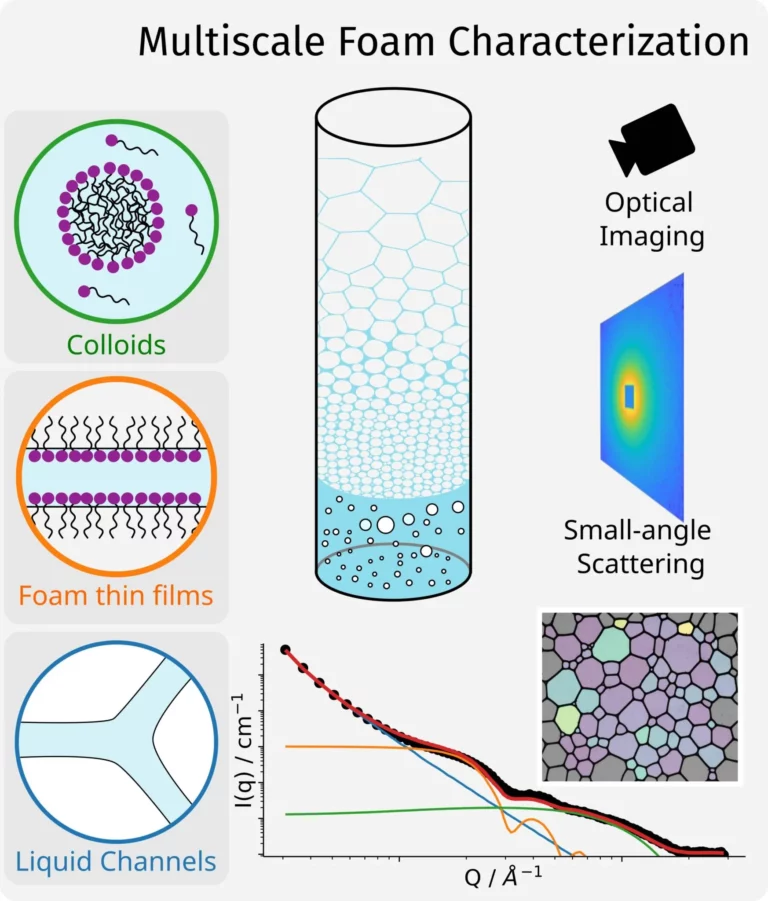
Unveiling the Hidden Structure of Foams with Neutron Scattering

Foams are fascinating, highly complex systems whose structural characterisation is challenging due to the broad range of length scales involved, from nanometres to macroscopic dimensions. Neutron scattering, combined with complementary techniques, provides insight into their multiscale structure, revealing unexpected aspects of the fundamental physics of liquid foams.

https://doi.org/10.1038/s41467-026-70767-8

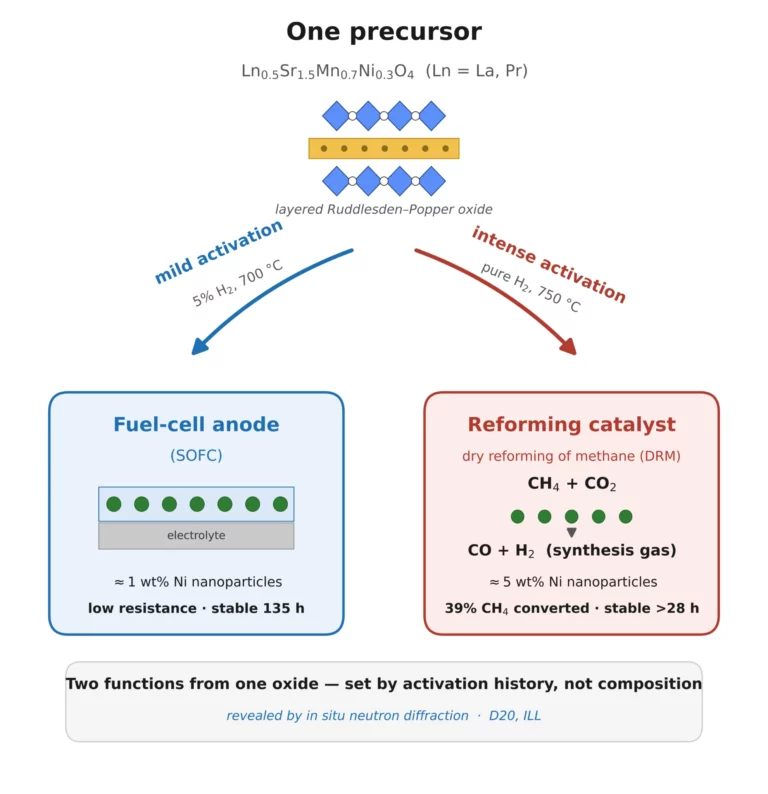
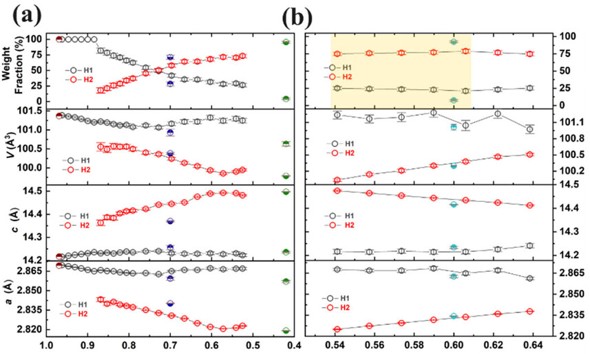
Watching an oxide reinvent itself in real time: in situ neutron diffraction reveals how activation history steers Ruddlesden–Popper oxides toward fuel-cell or catalyst behaviour

What if a material’s history mattered more than its composition? Using in situ neutron diffraction (D20, ILL) to watch a strontium-rich Ruddlesden–Popper oxide being reduced, this study shows that a single precursor can become either a high-performing fuel-cell anode or a robust methane-reforming catalyst — depending solely on how it is activated. By tracking, in real time, the oxygen that X-rays cannot see, neutrons turn this « activation engineering » into a predictable design tool.

https://doi.org/10.1038/s41467-026-70767-8

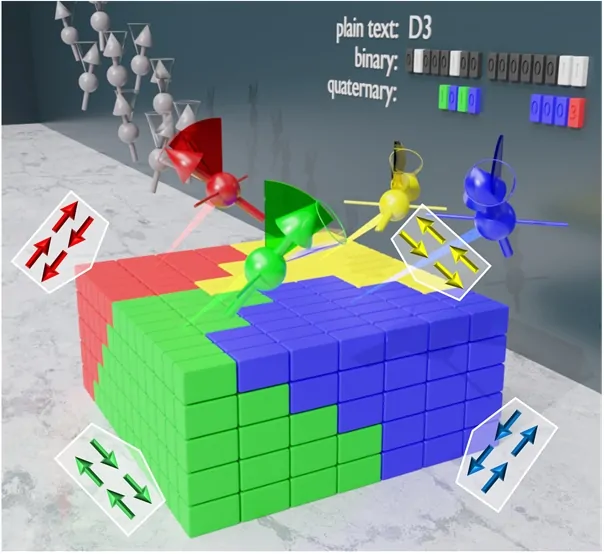
Towards a Four-State Magnetic Memory Thanks to Toroidality


Researchers from the ILL, the CEA, and international partners have demonstrated for the first time a non-volatile quaternary memory in a bulk antiferromagnetic material, the orthophosphate LiNi0.8Fe0.2PO4. Using spherical neutron polarimetry, they identified and controlled four distinct magnetic domains with electric and magnetic fields. This approach leverages toroidality to pave the way for spintronic devices with high storage density and low power consumption.

https://doi.org/10.1002/aenm.202506600

Probing the Mechanism of Lithium Extraction within a Solid-state Battery in Real Time

How do lithium ions actually move inside a solid-state battery while it charges? For the first time, a team of researchers from the Institut Laue-Langevin (ILL), the LRCS (Amiens) and ICMCB (Bordeaux) have watched this process in real time using neutron diffraction, the only technique sensitive enough to track lithium deep inside a thick, working battery. Their findings reveal unexpected structural complexity in the electrode, and point the way toward smarter battery designs.

https://doi.org/10.1002/aenm.202506600

French-German Round Table

France, represented by the Société Française de Physique, was the guest country at the German Physical Society Spring Meeting, held in Dresden from March 8 to 13, 2026, with the participation of numerous French guests.

The 2FDN was invited to co-organize a round table on French-German collaboration in the field of neutron scattering, bringing together representatives from several neutron centers (LLB, ILL, JCNS, MLZ), as well as the SFN and the KFN.

This round table, organized by the “Physical Chemistry and Polymer Physics” section, took place on Wednesday, March 11.

A report is available here.

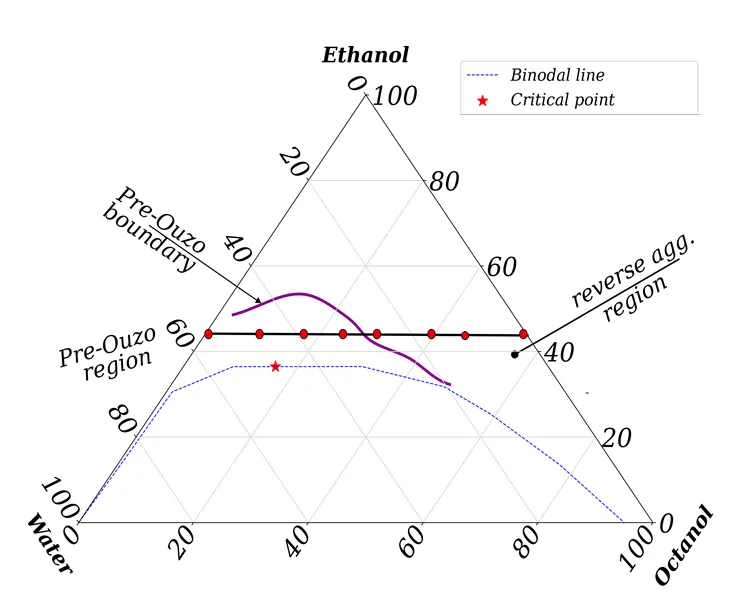
Effect of Ultra-Soft Microemulsion Formation on Dynamical Properties at Various Length Scales

In a mixture of solvents, the self-assembly of a few molecules can give rise to unexpected macroscopic properties (viscosity and solubility), offering significant potential for the development of innovative solvent systems. Not only the characterization of the structural organization is necessary to understand the origin of such unexpected properties, also the dynamics play a crucial role. Neutron scattering provides invaluable information about them.

https://doi.org/10.1016/j.molliq.2025.127684